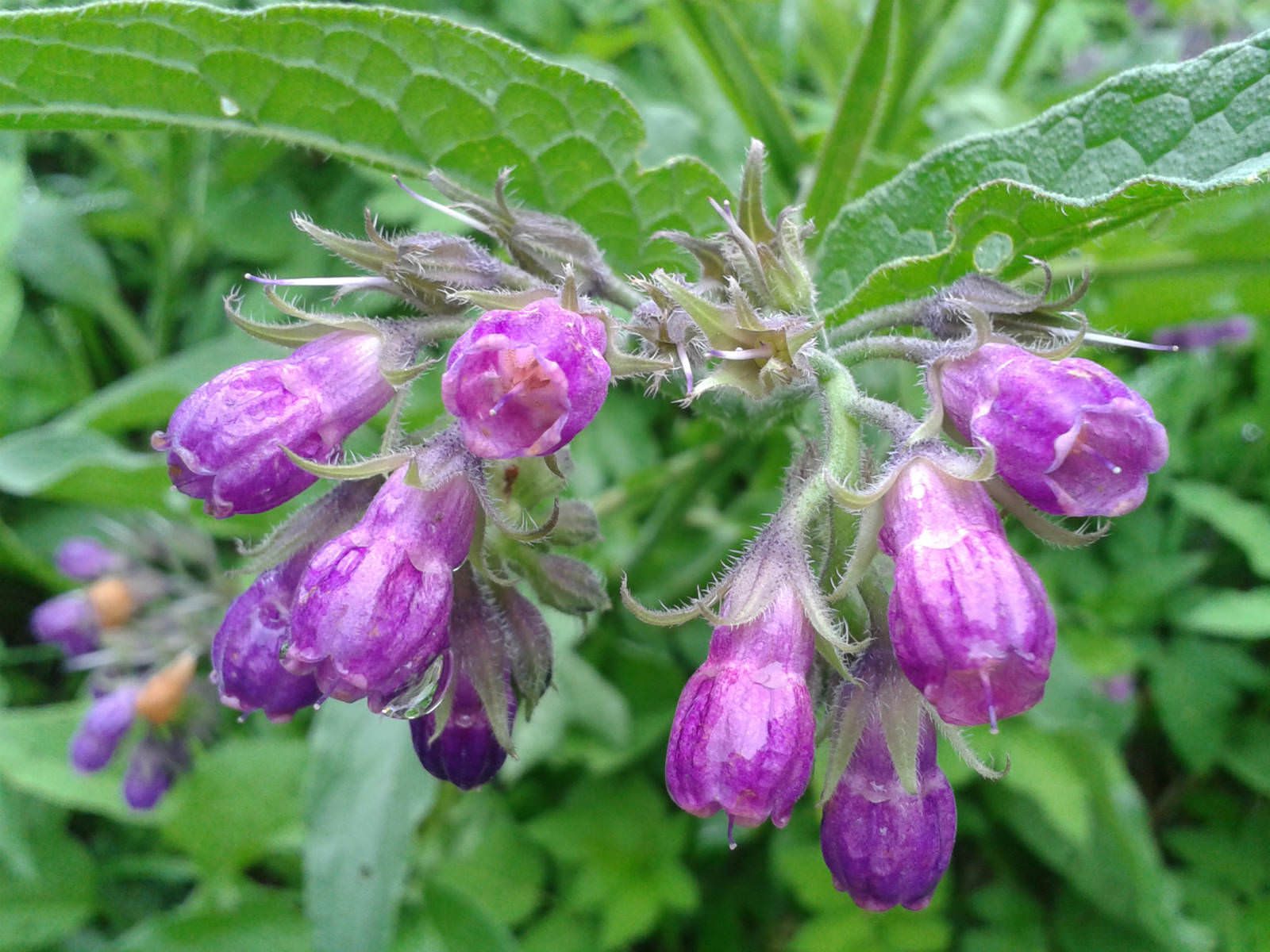
If you’ve ever gardened, you’ve probably heard the name comfrey — sometimes whispered with reverence, sometimes dismissed as a weed. But this humble plant, with its broad leaves and purple-pink flowers, is more than just a garden oddity. It’s a superstar of the natural world, with a rich history, incredible benefits for soil, plants, and even people.
Let’s dig into the story of comfrey — the plant that’s been healing for centuries, feeding the earth, and inspiring gardeners and herbalists alike.
🌿 What Is Comfrey?
Comfrey (Symphytum officinale) is a perennial herb native to Europe and parts of Asia. Its name comes from the Latin symphytum, meaning “to grow together” — a nod to its legendary ability to heal wounds and mend broken bones.
It’s a fast-growing plant, often reaching 3–4 feet tall, with large, fuzzy leaves and clusters of bell-shaped flowers that attract bees and butterflies. While it’s sometimes seen as a nuisance in lawns, in the garden, it’s a true ally.
🌱 A Plant That Heals the Earth
Comfrey is often called a “dynamic accumulator” — a plant that pulls nutrients from deep in the soil and makes them available to other plants. Its deep taproot can reach down 3 meters (10 feet) or more, pulling up potassium, calcium, nitrogen, and phosphorus — nutrients that most plants can’t access.
When you cut comfrey leaves (or they die back), they return those nutrients to the topsoil. This makes comfrey a natural fertilizer and soil builder.
✅ Benefits for Your Garden:
Compost booster: Add comfrey to your compost pile to speed up decomposition and boost nutrient content.
Mulch magic: Chop and drop comfrey leaves around your plants — they’ll break down and feed the soil.
Fertilizer tea: Steep comfrey leaves in water to make a nutrient-rich liquid fertilizer (great for tomatoes, peppers, and roses).
Soil stabilizer: Its roots prevent erosion on slopes and banks.
In permaculture, comfrey is often planted near fruit trees, berry bushes, and vegetables — a quiet gardener that feeds the whole ecosystem.
🌿 Healing Power: A Natural Remedy (With Caution)
For centuries, comfrey has been used in traditional herbal medicine for its healing properties. It’s been applied topically to treat:
Bruises
Sprains and strains
Cuts and wounds
Arthritis and joint pain
This is thanks to a compound called allantoin, which promotes cell regeneration and soothes inflamed skin.
🧴 How to Use It (Topically):
Poultice: Crush fresh leaves and apply directly to the skin (wrap in cloth if needed).
Salve or ointment: Infuse comfrey leaves in oil, then mix with beeswax.
Tincture: Use in small amounts for external use only.
⚠️ Important Note: Comfrey contains pyrrolizidine alkaloids (PAs), which can be toxic to the liver if taken internally. Do not ingest comfrey unless under the guidance of a qualified herbalist. It’s best used externally.
🌍 A Plant with a Rich History
Comfrey has been around for thousands of years:
Ancient Greece and Rome: The Greek physician Dioscorides called it “knitbone” — a name that stuck.
Medieval Europe: Used in monastic gardens and folk medicine to treat broken bones and wounds.
18th–19th century: Popular in home remedies and apothecary practices.
20th century: Its use declined due to safety concerns, but it remains a favorite in organic and sustainable gardening.
Even author Lawrence Hill, known for his powerful novels like The Book of Negroes, has written about his personal connection to comfrey — not just as a plant, but as a symbol of resilience, healing, and connection to the earth.
🌿 Why Gardeners Love Comfrey
Beyond its practical benefits, comfrey is a joy to grow:
Low maintenance: Once established, it’s nearly self-sufficient.
Drought-tolerant: Needs little water once rooted.
Pollinator-friendly: Bees and butterflies love its flowers.
Edible (in moderation): Young leaves can be cooked like spinach — but use sparingly.
And it’s not invasive in most climates — though it can spread if not managed. (Tip: Grow it in a container or a designated area to keep it in check.)
🌿 A Plant That Connects Us All
Comfrey reminds us that nature holds wisdom — in its roots, its leaves, and its quiet strength. It’s a plant that gives back, that heals, that teaches us about interdependence.
Whether you’re a seasoned gardener, a wellness enthusiast, or just someone who loves the outdoors, comfrey is a gentle reminder that the most powerful healing often comes from the earth itself.
🌱 How to Grow Comfrey (Simple Steps)
Plant in full sun to partial shade.
Soil: Well-drained, rich, and moist.
Propagation: Easily grown from root cuttings (spring or fall).
Harvest: Cut leaves when flowering begins (before seeds form). Use fresh or dry.
Use: Compost, mulch, tea, or topical remedy — but never internal use.
Final Thought
Comfrey is more than a plant — it’s a gift. It heals the soil, supports other plants, soothes the skin, and even speaks to the soul. In a world that often feels disconnected, comfrey reminds us to grow deep, give generously, and heal together.
So next time you see a comfrey plant, don’t just see a weed. See a healer, a nurturer, a silent gardener doing its part — and maybe, just maybe, you’ll want to grow one yourself.
🌱
Disclaimer: This article is for educational purposes only. Always consult a healthcare professional before using herbal remedies, and avoid internal use of comfrey due to potential liver toxicity.