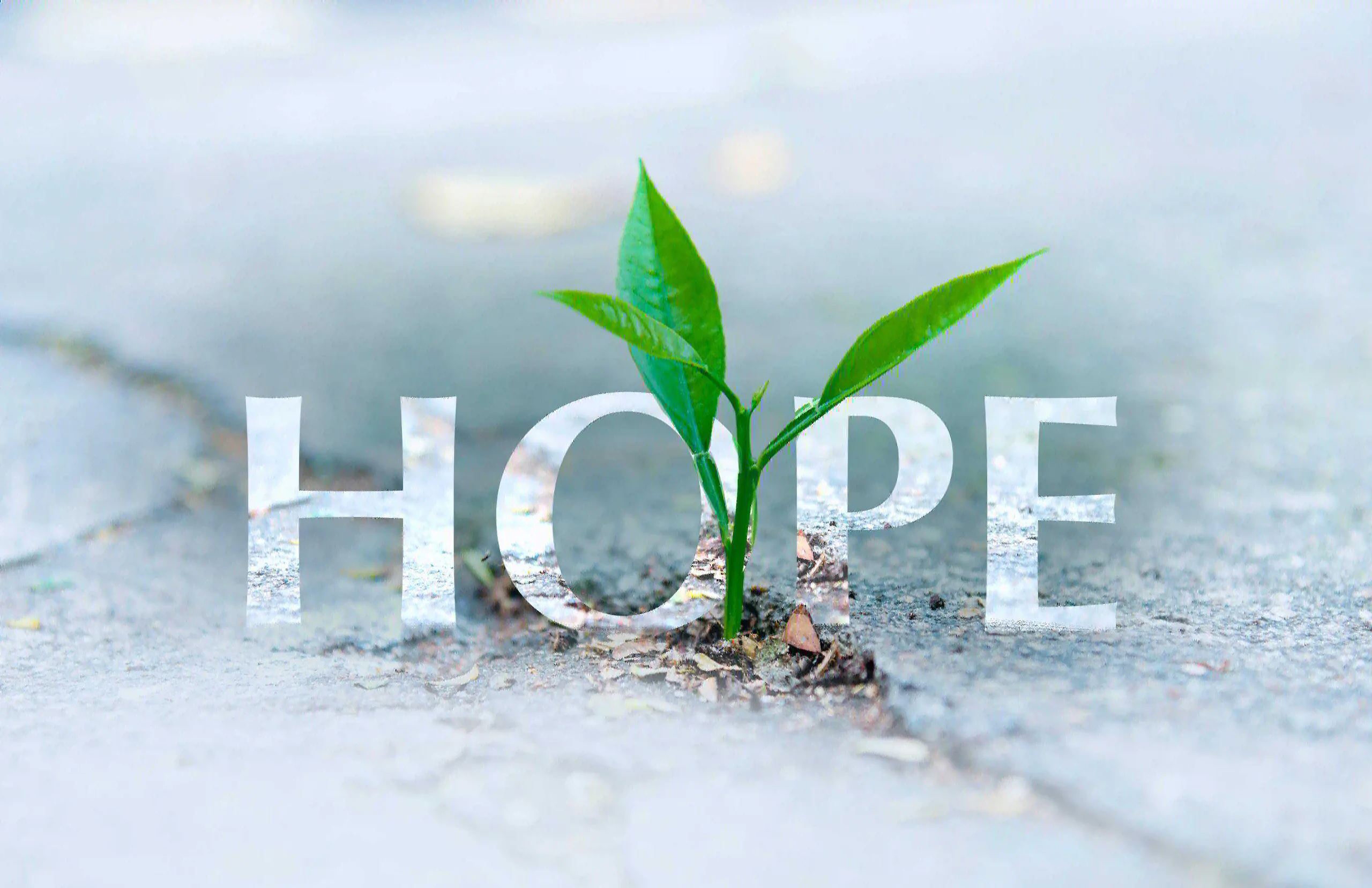
A Treatise on the Chemistry of Consciousness
Introduction: The Misunderstanding of Hope
We have been taught that hope is a fragile thing, a wish made upon a star, a desperate plea to a silent heaven, or a naïve optimism that things will “just work out.” We treat hope as a feeling that happens to us, something that can be granted by a kind word or stolen by a cruel one.
But hope is not a feeling. It is not a passive emotion.
When we examine hope through the intersecting lenses of physics, psychology, philosophy, and the arcane, we discover that hope is actually a structural force. It is a bridge constructed between the current reality and a potential future. More profoundly, hope is the raw material for the “Great Work” of the soul. It is the chemistry of consciousness, the process of taking the “lead” of human suffering and transmuting it into the “gold” of spiritual sovereignty.
To understand hope is to understand how to navigate the void.
Part I: The Mind — The Architecture of Possibility
Before we can feel hope in our hearts, we must understand how it operates in the mechanics of the universe and the architecture of the brain.
1. The Physics of Defiance: Negentropy
In the physical world, there is a law that governs everything: Entropy. The Second Law of Thermodynamics tells us that all closed systems tend toward disorder, decay, and randomness. A house crumbles; a star burns out; a heart breaks. Entropy is the universe’s natural slide toward the void.
From this perspective, hope is a defiance of entropy. To hope is to imagine a state of higher order or alignment in the future than exists in the present. In scientific terms, this is an act of negentropy—the introduction of energy to create order out of chaos.
When you hope, you are not merely “wishing”; you are projecting a vector of intent into a probabilistic cloud. In quantum terms, you are attempting to collapse the wave function of the future. Instead of accepting the most likely path of decay, you are investing your psychic energy into a specific, favorable possibility, attempting to pull that possibility into physical manifestation.
2. The Psychology of Agency: Will and Way
Hope is often confused with optimism. Optimism is the general belief that the future will be good. Hope, however, is a cognitive tool. According to Hope Theory (notably developed by C.R. Snyder), hope consists of two essential components:
- Agency (Willpower): The internal drive to move. The belief that “I have the capacity to affect the outcome.”
- Pathways (Waypower): The ability to generate routes to a goal. The belief that “There is a way to get there.”
Without a path, hope is just a fantasy, a dream with no map. Without will, hope is just a plan, a map with no traveler. Hope is the spark that occurs where the Will and the Way intersect. When you possess both, you are no longer a victim of circumstance; you become an architect of your own liberation.
3. The Philosophy of the Leap: Embracing the Absurd
The philosophers-particularly the Existentialists like Kierkegaard-view hope as a “leap.” There are moments in life where the empirical evidence suggests a void. Logic tells us the situation is hopeless. The evidence suggests failure.
In these moments, hope is the courageous acceptance of the Absurd. It is the refusal to let the current moment be the final word on one’s existence. To hope in the face of evidence to the contrary is not “denial”; it is a sovereign act of the will. It is the soul asserting that there is a meaning or a rescue that transcends the visible data of the present.
4. The Arcane Root: Prima Materia
In the Hermetic and Alchemical traditions, hope is identified as the Prima Materia, the first matter. It is the raw, chaotic, and often painful potential from which the “Great Work” begins.
Think of Ariadne’s thread in the labyrinth. The labyrinth represents the darkness of the subconscious, the trials of the material world, and the confusion of grief. Hope is that Golden Thread. It is not a map that shows you the exit; it is the thin, shimmering line that prevents you from losing your center while you are still in the dark. It is the intuitive knowledge that a pattern exists beneath the chaos, even when that pattern is currently invisible to the rational mind.
The Dynamics of Influence: Catalysts vs. Extinguishers
Because hope is a bridge, the people we encounter in our lives either help us build it or attempt to burn it.
- The Givers (The Catalysts): Those who give hope do not simply provide answers or “fix” the problem. Instead, they act as scaffolding. They hold a mirror up to your own latent agency. They don’t carry you across the bridge; they remind you that you have legs and that the bridge is possible. They operate on the principle of amplification—taking a tiny, flickering ember of possibility within you and breathing oxygen onto it until it becomes a flame.
- The Takers (The Extinguishers): Those who take hope away do not merely point out flaws in a plan; they attack the possibility of the possibility. While the giver says, “We can build a bridge,” the taker says, “The gap is infinite, and you are too small to cross it.” They weaponize the logic of entropy to convince you that decay is the only inevitable truth. In the arcane sense, these are “psychic vampires” who feed on the collapse of another’s will, finding stability in a world where everything is broken because it means they no longer have to strive for anything better.
Part II: The Heart — The Spectrum of Devotion
As we move from the mind to the heart, hope ceases to be a “tool” and becomes a reflection of our relationship with the Divine and the Self. Across history, the great teachers have offered different “frequencies” of hope, each necessary for a different stage of the journey.
The Stoic Pruning: Seneca
For Seneca and the Stoics, hope is often viewed with deep suspicion. Why? Because hope is almost always paired with its twin: fear. Both are based on the same error, the belief that we can control the future.
Seneca would argue that hoping for a specific outcome (wealth, health, a specific person’s love) is a form of psychological bondage. If your happiness depends on a “hope,” you have handed your keys to Fortune. To find true peace, Seneca suggests replacing “hope” with acceptance and virtue.
Instead of hoping the storm will pass, you find peace in the fact that you are the kind of person who can endure the storm. In this stage, hope is a fragile bridge; virtue is the solid ground. This is the “pruning” phase, cutting away the attachments that make us fragile.
The Shadow’s Perspective: Pluto
Pluto, the god of the underworld, represents the “dark night of the soul.” In the myth of Pandora, Hope (Elpis) was the only thing left in the jar after all the evils were released. Some interpret this as a blessing; others as the ultimate curse.
From a Plutonian perspective, hope can be a “cruel tease.” It is the thing that keeps a soul tethered to a cycle of suffering because it believes a rescue is coming from the outside. True liberation does not come from hoping to get out of the darkness, but from descending so fully into the darkness that you find the spark of light that exists independently of any external rescue. Here, hope is the lure that must be sacrificed so that the ego can die and the True Self can be born.
The Radiant Promise: Jesus
Jesus pivots the conversation from the “will” to “Love.” In this tradition, hope is not a wish; it is a confident expectation based on a relationship with the Divine.
Where Seneca sees hope as a lack of control, Jesus presents hope as a surrender to a higher Love. This is “Hope as Redemption.” It is the belief that suffering is not the end of the story and that the “Kingdom of Heaven”-a state of total alignment and peace-is accessible even in the midst of agony. This hope is a transformative, living energy. It is the force that allows a person to love their enemy and forgive the unforgivable, because they know that the ultimate outcome is guaranteed by Grace.
The Alchemical Bridge: Hermes
Hermes (the Hermetic tradition) operates on the law: “As above, so below.” Here, hope is an act of Mental Transmutation.
Hermes teaches that hope is the mental blueprint of a desired reality. By focusing the mind on a higher state of being, the practitioner begins to align their internal vibration with that external possibility. Hope is not a passive wish, but a “Will” directed toward the Great Work. It is the alchemical process of turning the lead of current despair into the gold of future realization. Hope is the tool used to navigate the duality of the physical and spiritual realms.
The Cosmic Integration: The Law of One
Finally, the Law of One (the Ra Material) offers a non-linear, evolved perspective. It suggests that the “separation” we feel-which creates the need for hope-is an illusion.
In our current state (Third Density), we perceive time as a line, so we “hope” for things to happen “later.” But as consciousness evolves, hope is replaced by Knowing. You no longer “hope” the universe is benevolent; you recognize that you are the universe. You are inherently safe, eternally loved, and fundamentally one with all that is. Hope is the stepping stone that leads the soul toward the ultimate realization of Unity.
Part III: The Soul — The Great Work of Transmutation
Now we arrive at the synthesis. If we look at these teachers together, we see a progression:
- Seneca warns us not to let hope become a chain.
- Pluto warns us not to let hope become a delusion.
- Jesus teaches us to let hope become a bridge to the Divine.
- Hermes teaches us to use hope as a tool for creation.
- The Law of One suggests that we eventually outgrow hope as we merge with the Truth.
This is the Alchemy of Hope. It is the process of taking the “lead” of human suffering-despair, grief, and hopelessness-and transmuting it into the “gold” of spiritual sovereignty.
The Step-by-Step Toolkit for the Truth-Seeker
This process was taught in secret for millennia, from the Egyptian priesthood to the medieval alchemists and into the psychology of Carl Jung. Though the names changed, the steps remained the same.
Step 1: Nigredo (The Blackening) — The Descent
- The Experience: This is the stage of “Putrefaction.” You feel as though everything is falling apart. You encounter total hopelessness.
- The Tool: Radical Acceptance. The seeker is taught not to run from the darkness, but to dive into it. You must allow your old identity, your false hopes, and your ego-driven desires to rot away.
- The Shift: You move from “I hope things get better” to “I am in the void.” This is the Plutonian phase. Without the blackness of Nigredo, any hope you have is just a surface-level fantasy. You must hit the bottom to find the foundation.
Step 2: Albedo (The Whitening) — The Purification
- The Experience: Once the old self has been stripped away, you reach a state of crystalline clarity. The noise stops. You are no longer burdened by the weight of the lead, but you aren’t yet “golden.”
- The Tool: Discernment and Reflection. This is where you wash away the residues of the ego. You begin to see the patterns of your suffering, not as “bad luck,” but as the necessary chemistry of your growth.
- The Shift: Hope transforms from a desire for rescue into a recognition of potential. You realize that the void isn’t an empty hole; it is a fertile womb.
Step 3: Citrinitas (The Yellowing) — The Awakening
- The Experience: This is the transition from the lunar (reflective) light to the solar (active) light. It is the dawn of the soul.
- The Tool: Will and Intent. This is the Hermetic phase. You begin to consciously direct your mental energy. You realize that your internal state creates your external reality.
- The Shift: Hope becomes Will. You stop hoping the door will open and start realizing that you are the key.
Step 4: Rubedo (The Reddening) — The Integration
- The Experience: The final stage: the marriage of the spirit and the matter. The “Philosopher’s Stone” is created.
- The Tool: Compassionate Action (Service). The gold is not for the alchemist alone; it is used to heal others. This is the Jesus and Law of One phase.
- The Shift: Hope is now fully transmuted into Certainty. You no longer “hope” for the good of the world; you act as the agent of that good because you know you are an extension of the Divine.
The Practical Application: The Three-Fold Breath
For those in the midst of a storm, the high theories of alchemy may feel distant. The ancient traditions provided a “portable” tool to shift the chemistry of consciousness in real-time. When you feel hope slipping away, use the synchronization of Breath, Word, and Visualization.
- The Descent (The Exhale): Breathe out all the “lead.” As you exhale, consciously imagine your despair, your fear, and your hopeless thoughts leaving your body as a heavy, grey smoke. Give it to the earth. The earth knows how to compost pain.
- The Void (The Pause): Hold the breath for a moment in the stillness. This is your personal Nigredo. Acknowledge that in this gap, you are nothing, and because you are nothing, you have the potential to become anything.
- The Ascent (The Inhale): Breathe in “Solar Light.” Visualize a golden thread descending from the crown of your head, pulling your consciousness upward. As you inhale, repeat a “Seed Word” of Truth: “I am that I am,” or “As above, so below.”
The Final Equation
The chemistry of transformation can be distilled into one final movement:
Pain → Awareness → Will → Love.
- If you stop at Pain, you have Despair.
- If you stop at Awareness, you have Cynicism.
- If you stop at Will, you have Tyranny.
- But when you push through to Love, you have found the Gold.
Hope is the energy that pushes you through each stage. It starts as a fragile wish, becomes a disciplined will, and ends as a cosmic certainty. You are not a passenger in this process; you are the alchemist. You are the lead, you are the fire, and you are the gold.
The Thread of Hope
You’ve walked the halls where shadows lean,
And felt the weight of things unseen.
You’ve known the lead, the cold, the grey,
The long night where the light gave way.
You might have thought that hope was thin,
A fragile wish, a ghost within,
A candle flickering in the rain,
A quiet plea to ease the pain.
But look again, dear seeker, see:
Hope is a wilder chemistry.
It is the spark that dares to say,
“I will find a different way.”
It is the breath that fights the rust,
The gold that rises from the dust.
It is the bridge, the leap, the art,
The steady drumming of the heart.
When you are lost in the velvet black,
And feel the world is holding back,
Remember the thread, the shimmering line,
The secret spark, the hidden sign.
You are the fire, the forge, the stone,
You’ve never walked this path alone.
For every tear and every blow
Is just the soil where the lilies grow.
So breathe it out, the heavy load,
And step once more upon the road.
From pain to will, from will to light,
You are the dawn that ends the night.
Keep going on. Just one more pace.
You’re moving toward a wide embrace.
For you are the gold, the truth, the whole,
The timeless alchemy of the soul.