
Intro: What A Wonderful World
It’s like we’re living in a Twilight Zone episode. No, not the one with the twist ending, but the one where the twist is that there is no twist. Picture this. They’re all just… same. Same faces, same voices, same march. Everyone’s on a mission, but the mission is never explained. It’s just… forward. Always forward. No pauses. No questions. No depth. No layers. Just motion. And it’s sad. Really sad.
Some look like parrots with beards, repeating the same lines, flapping their mouths in sync. Others are cookie-cutter faces, molded from the same mold, stamped out in rows. No creativity. No opinion. No thoughts to discern. Just noise. Noise that is disguised as truth trumpet sound.
We’re not even real. We’re the product. Yes, aliens are in our twilight zone episode. The alien civilization didn’t conquer us, they created us. And they’re selling us to each other. Entertainment and power struggle is the drug, given with a smile and taught as language. The dopamine hits, the viral memes, the curated outrage, we’re all just addicted viewers. We cheer. We cry. We love. We hate. We celebrate love once a year like it’s a holiday for the soul. And we do it all with a smile.
The love that embraces a fight, and befriends the taker. Our society is a reflection of our truth. Withholding kindness from the kind, but generously extending it to the cruel. Accusing the one who knocks with an invasion, while leaving the front door open to the real invader.
Taking from the giver till their well is dry only to give to the taker.
Because we’ve been trained to believe this is what life is. This is what happiness looks like. This is what freedom feels like. When we can’t even acknowledge those who love us.
And the worst part? We love it. We celebrate it. We praise it.
So yeah. What a wonderful world.
A world where we’re the fools, the audience, the entertainment, and the only thing more tragic than being controlled is not even realizing it.
But hey, maybe that’s the twist. Maybe the alien overlords don’t need to control us.
We already do it to ourselves.
And we do it so well.
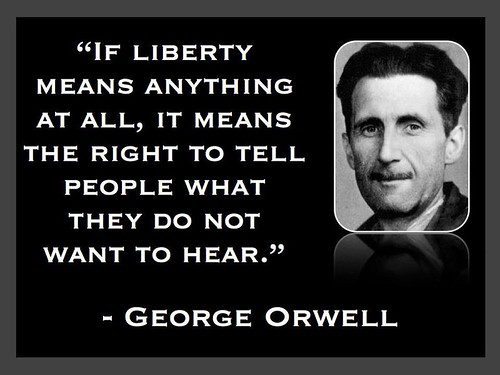
The Terrifying Truth
It’s a quiet, creeping dread, like the world has been rerouted through a machine built not for progress, but for control. We’re not living in a future that was dreamed of. We’re living in a future that was engineered. A future where the United States, once the beacon of democracy and innovation, has become a technocratic fortressb, uilt not on ideals, but on capital, data, and the silent complicity of a population that no longer remembers what freedom feels like.
This is not a story of collapse. It’s a story of conversion. Of transformation. Of a nation that, in its pursuit of stability and power, willingly handed over its sovereignty to a new kind of elite: not kings, not generals, not even politicians—oligarchs.
And they didn’t come with swords or tanks. They came with code, algorithms, and financial engineering.
The Rise of the Oligarchs: From “Too Big to Fail” to “Too Powerful to Stop”
It began in 2008. The Great Financial Crisis. A collapse not of ideology, but of trust. The system was broken. And rather than rebuild it, the U.S. government chose to restructure it, on the terms of the very institutions that caused the collapse.
Bush and Obama, in a rare moment of bipartisan clarity, agreed on one thing: make the banks bigger. Not smaller. Not more accountable. Bigger. The result? A consolidation of wealth into a handful of financial institutions, Goldman Sachs, JPMorgan Chase, Citigroup, Bank of America. These were no longer just banks. They were financial empires. And they were now too big to fail, and therefore, too powerful to regulate.
The bailout wasn’t just about saving the economy. It was about redefining it. $700 billion in taxpayer money was funneled into the financial sector, while the rest of the country was left to drown in debt. Homeowners were foreclosed on. Workers lost jobs. But the banks got richer. And they didn’t just survive, they thrived.
This was the first step in a long, slow process of privatizing the state. The government, in its desperation, handed over the reins of the financial system to private actors. And once they had control, they didn’t let go.
By 2010, the Federal Reserve had become a tool of the banks, not the people. The Dodd-Frank Act was passed, but it was weak, full of loopholes, and ultimately ineffective. The real power was no longer in Congress. It was in the boardrooms of Wall Street, where the real economy was being shaped by private interests.
And then came the next phase: technology.
The Tech Oligarchy: From Silicon Valley to Global Control
In 2012, Elon Musk was quietly privatized by the U.S. government. Not through a hostile takeover, but through strategic partnerships. NASA’s space program, once a symbol of national pride, was handed over to SpaceX. The same year, Tesla received $465 million in government loans—funds that were used not to save the auto industry, but to create a new one.
But this wasn’t just about innovation. It was about control.
The government didn’t just fund Tesla. It empowered it. And in return, Musk became a key player in the new financial order. He didn’t just build cars. He built a platform, a network of AI, robotics, and energy systems that would one day be the backbone of the digital economy.
And he wasn’t alone.
Palantir and Oracle, two of the most powerful data analytics firms in the world, were given their first major government contracts under Obama. Palantir, founded by Peter Thiel, was tasked with analyzing vast amounts of surveillance data. Oracle, a company that had long dominated enterprise software, was given access to national security databases.
These aren’t just tech companies. They are private intelligence agencies.
And they don’t just work for the government. They have become the government.
By 2020, the line between public and private had blurred. The U.S. military was no longer just a national defense force. It was a private contractor’s playground.
The Weaponization of Defense: Lockheed Martin and the Military-Industrial Complex 2.0
The most chilling example of this shift is the defense industry.
For decades, the U.S. military has relied on private contractors to design, build, and maintain its weapons systems. But in the 2010s, this relationship reached a new level of dependency.
Take the F-35 Lightning II. It’s the most advanced fighter jet in the world. But here’s the catch: no F-series plane can be modified, repaired, or updated outside of Lockheed Martin. The entire system is locked down. The software is proprietary. The parts are manufactured exclusively by Martin. And the company has complete control over the supply chain.
This isn’t just a business model. It’s a strategic monopoly.
And it’s not just the F-35. The same pattern is repeated across the defense sector. Raytheon, Boeing, Northrop Grumman, all of them are now private warlords. They don’t just build weapons. They control them.
And the government is no longer the customer. It’s the client.
This is the new military-industrial complex, one where profit is the mission, and national security is the product.
The Dollar’s Dominion: From Petrodollar to Digital Dollar
For decades, the U.S. dollar has been the world’s reserve currency. But this dominance wasn’t just economic. It was geopolitical.
Oil could only be traded in dollars. Countries that wanted to buy oil had to hold dollars. This created a global demand for the U.S. currency, which in turn gave the U.S. immense leverage over the world economy.
But in the 2010s, that dominance began to crack.
China started pushing its own digital currency. Russia began trading oil in euros and yuan. And decentralized finance (DeFi) began to emerge as a threat to the traditional financial system.
The U.S. responded, not with reform, but with reinforcement.
Trump in his first term, removed the dollar requirements for oil trading. And in 2023, the Biden administration launched the Digital Dollar Project, a plan to create a central bank digital currency (CBDC) that would be backed by the U.S. government. The goal? To maintain dollar dominance in the digital age.
But this wasn’t just about money. It was about control.
The Federal Reserve was already experimenting with digital currencies. And in 2024, the Securities and Exchange Commission (SEC) released a report titled “Securing Digital Dollar Dominance: A Comprehensive Framework for Stablecoin Regulation and Innovation” a document that outlined how the U.S. would regulate and dominate the global stablecoin market.
By 2025, USD-denominated stablecoins accounted for over 90% of the total market. This wasn’t just a coincidence. It was a strategic victory.
And the U.S. wasn’t just protecting its currency. It was weaponizing it.
The New World Order: Oligarchs, AI, and Quantum
Now, the game has changed again.
Artificial intelligence is no longer just a tool. It’s a weapon.
By 2024, AI systems were being used to predict market trends, manipulate public opinion, and automate warfare. The most advanced AI models were developed not by governments, but by private companies, Google, Microsoft, OpenAI, Anthropic.
And then came quantum computing.
In 2025, the U.S. government announced that it had achieved quantum supremacy, the ability to perform calculations that would take classical computers thousands of years in mere seconds. But this wasn’t just a scientific breakthrough. It was a strategic one.
Quantum computers could break encryption. They could hack any system. And the companies that controlled them? They controlled the future.
The oligarchs-Musk, Zuckerberg, Bezos, Thiel-were no longer just billionaires. They were godlike.
They had control over the internet, control over finance, control over defense, and now, control over the future.
And they were not alone.
The Two Faces of Fascism: One Racist, One Prejudiced
This is where things get truly dangerous.
On one side, you have fascism as ideology, racist, nationalist, authoritarian. It’s the kind of fascism that wears a flag and shouts slogans.
On the other side, you have fascism as system, technocratic, data-driven, invisible. It’s the kind of fascism that doesn’t need a leader. It just needs algorithms.
And both are converging.
Look at Chuck Schumer. A man who has long been a champion of progressive values, until he wasn’t. In 2025, he announced a new National AI Security Initiative, a plan to regulate AI, but only in a way that benefits the existing power structure.
He didn’t want to stop AI. He wanted to control it.
And he wasn’t alone.
The U.S. government, in its desperation to maintain dominance, has privatized more and more of its functions. The Department of Defense now outsources 70% of its operations to private contractors. The Department of Homeland Security uses AI surveillance to monitor citizens. And the Federal Reserve is now run by algorithmic models that predict inflation and interest rates.
This isn’t just technocratic governance. It’s fascism without a face.
And the worst part? The people don’t even notice.
The Destination: A World Without Freedom
So where are we headed?
We’re headed to a world where:
The dollar is digital.
The military is private.
The economy is algorithmic.
The people are data.
And the oligarchs-the ones who built this system-are no longer just rich. They’re omnipotent.
They control the money, the technology, the warfare, and the information.
And they don’t care about you. They don’t care about me. They don’t care about democracy.
They care about control.
And they’re getting it.
The Only Hope: The People
Think of it this way: you can’t embrace narcissism while claiming to stand for empathy, kindness, and love. A narcissist demands specific communication methods and behavior, and the same applies in politics. In a democracy, you can vote for fascism; under fascism, however, you can’t vote for democracy. Fascist regimes also demand particular speech and behavior.
But here’s a reminder: fascism only works if the people let it.
And right now, the people are sleeping.
They’re distracted by entertainment. They’re addicted to social media. They’re blind to the truth.
But if we wake up-if we see the twilight zone for what it is-if we realize that we’re not just consumers, but products, then maybe, just maybe, we can change it.
Because the only thing more terrifying than the world we’re building…
is the world we could still stop.
And that’s the real twist.
The aliens didn’t conquer us.
We let them.